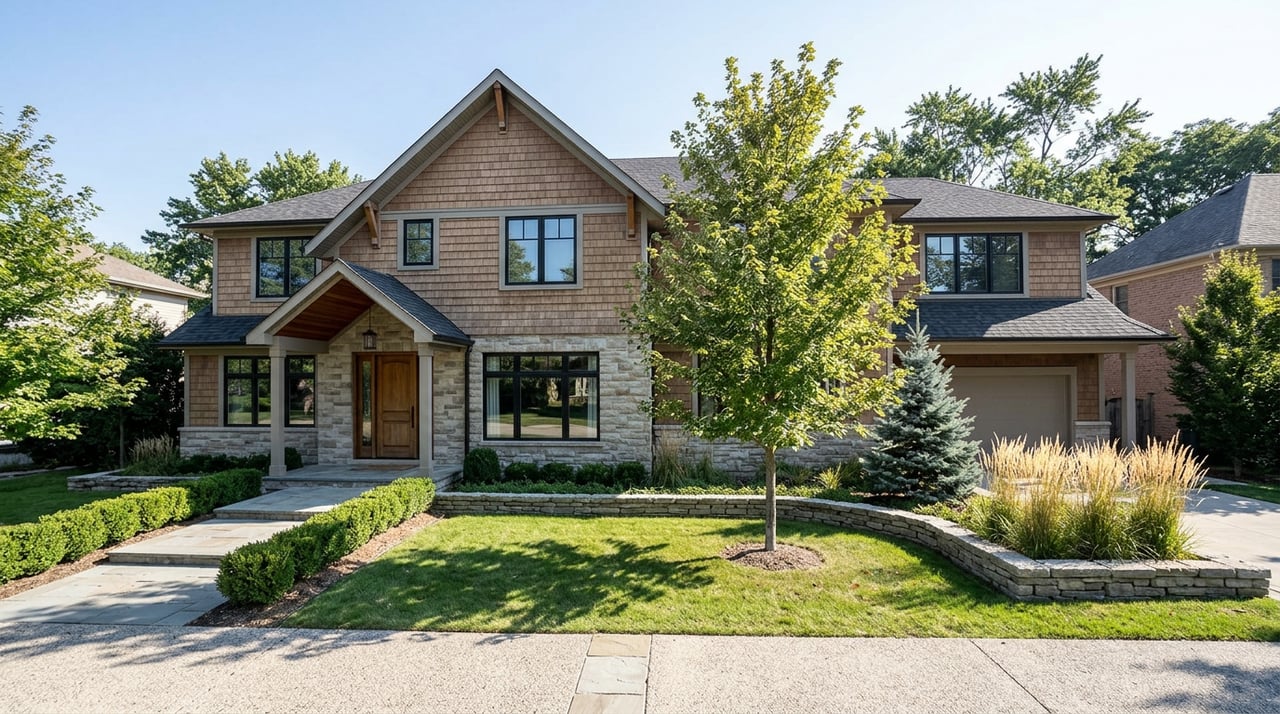
The Character Premium in Littleton Comes With Somebody Else's Sewer Line
Littleton's most expensive square footage right now isn't the square footage with the finished basement or the quartz island. It's the square footage sitting six feet underground, and it's usually the oldest infrastructure in the house. A mid-2026 neighborhood breakdown put the median in Historic Downtown Littleton at $725,000, up 20.8% year over year, well above the roughly $625,000 three-month median Redfin was reporting citywide through June 2026. Buyers paying that premium are buying a decade of construction they can't see, and in Littleton's case, that decade often means a sewer lateral installed before anyone thought to make it out of PVC.
This isn't an argument against buying old. It's an argument for pricing what you're actually buying, because the neighborhoods commanding Littleton's steepest premiums right now are the same ones most likely to be running on clay tile, cast iron, or Orangeburg pipe that predates the Nixon administration.
Picture two Littleton buyers writing offers the same week, both around the $625,000 to $725,000 mark. One is bidding on a bungalow a few blocks off Main Street in the historic core. The other is bidding on a two-story in a subdivision built in the last fifteen years. On paper, comparable price, comparable square footage, comparable schools and commute.
Underground, they are not comparable at all. The historic buyer's sewer lateral was likely installed sometime between the early 1900s and the 1970s, using whatever material was standard at the time: clay tile, cast iron, or the bituminous fiber pipe known as Orangeburg. The subdivision buyer's lateral is almost certainly PVC, installed within warranty-relevant memory. Neither buyer's contract mentions this, because a standard inspection doesn't include a sewer scope unless someone asks for one and pays extra.
That's the mechanism behind the premium. Character, proximity to downtown, and mature trees are real value drivers, and they're exactly what's pushing Historic Downtown Littleton's median past newer areas. But the same age that gives a home its character also gives it a specific, quantifiable plumbing liability that a subdivision fifteen minutes away simply doesn't carry.
Littleton's older neighborhoods, the blocks around Main Street, Bow Mar, Columbine Valley, and parts of Ken Caryl, sit on a mix of pipe materials that track almost exactly with construction era. Homes built before roughly 1970 tend to run on clay tile or cast iron. Homes built between the 1940s and early 1970s sometimes have Orangeburg pipe instead, a material made from layers of wood pulp bonded with coal tar pitch. It was marketed as a cheap, easy alternative to cast iron at the time. Decades later, it has a reputation for corrugating, softening, and collapsing under normal soil pressure, sometimes without any of the warning signs a homeowner would notice from inside the house.
None of that shows up on a walk-through. It shows up on a camera.
Littleton's clay-heavy soil doesn't just sit there while an old pipe slowly ages out. Bentonite clay in the ground swells when it absorbs moisture and shrinks as it dries, and that repeated movement puts direct pressure on anything buried in it, sewer laterals included. The stress compounds after heavy snowmelt or a wet spring, exactly the kind of seasonal swing the Front Range produces every year, and it's made worse at Littleton's roughly 5,400-foot elevation, where freeze-thaw cycles stress pipe joints each winter on top of the soil movement.
A newer PVC line generally tolerates that movement better than a century-old clay joint or a brittle stretch of Orangeburg. That's the layer a median price never separates out. Two houses in the same price band aren't just different vintages of finish work. They're different bets on how much the ground has already worked against the pipe.
The number that should change how a buyer negotiates isn't the repair estimate. It's the small number that tells you whether you need one.
| Step | Typical Cost | What It Actually Tells You |
|---|---|---|
| Sewer camera scope | Starting around $95 | Confirms pipe material and current condition before you're locked into anything |
| Standard home inspection in Littleton | $500 to $800+ | Covers structure, roofing, electrical, and mechanical systems; a sewer scope is usually a separate add-on |
| Trenchless repair (lining or bursting) | $2,800 to $7,500 | Fixes a defined defect without tearing up the yard or driveway |
| Full excavation and replacement | Exceeds the trenchless range | Needed when the line has collapsed or shifted too far for trenchless methods, cost varies with depth and access |
The gap between the top row and the bottom two rows is the entire argument. A test that starts around $95 is cheap insurance against a five-figure surprise, and it's the one line item that's genuinely optional on a standard Littleton inspection order. Skipping it on a 1920s bungalow to compete on offer terms is a different risk than skipping it on a home built in 2015, because the underlying probability of a problem isn't the same.
Colorado doesn't let a seller stay quiet about a known problem just because the buyer didn't ask the right question. Sellers complete a Seller's Property Disclosure form through the Colorado Real Estate Commission, and Colorado courts have gone further than the form itself. In a 2013 appellate decision, In re Estate of Gattis, the Colorado Court of Appeals held that sellers owe buyers an independent duty to disclose known latent defects, meaning problems that aren't visible during a normal walk-through, separate from whatever the standard form asks. That case involved undisclosed expansive soils under a foundation, but the same underlying logic, a hidden condition the seller knew about and a buyer couldn't reasonably discover, applies just as directly to a sewer lateral a seller has had backed up twice and never scoped.
That cuts both ways for a Littleton seller in an older neighborhood. A pre-listing scope either clears the line and becomes a selling point, or it surfaces a known issue the seller now has to address honestly rather than hope an inspector misses. Either outcome is better than finding out during someone else's due diligence period, with a deadline attached and leverage on the other side of the table.
None of this is legal advice, and a seller with real questions about disclosure exposure should talk to an attorney rather than rely on a blog post. But understanding that the duty exists changes how a seller in Bow Mar or the historic core should think about ordering a scope before the sign goes in the yard.
If you're weighing an older Littleton home against a newer one in the same price range, the sewer line isn't a footnote. It's a variable that should shape your offer strategy as much as square footage or lot size.
For buyers, that means asking for a sewer scope inspection specifically, not assuming it's bundled into a standard inspection, and treating a clean scope on an older home as real information worth paying a premium for, not a formality to waive to look competitive.
For sellers in the older neighborhoods, a pre-listing scope turns an unknown into either a clean bill of health you can point to or a problem you can price in and fix on your own timeline instead of the buyer's.
Does every historic Littleton home have Orangeburg pipe? No. Material varies by decade and by whoever did the original plumbing work. A home built in the 1950s could have cast iron, clay tile, or Orangeburg depending on what the builder used. That's exactly why the scope matters more than the build year alone.
Can I find out the pipe material before I even schedule an inspection? Sometimes. Municipal permit records occasionally note original plumbing materials for older properties, though coverage is inconsistent for homes built well before modern permitting was standard. A camera scope remains the only reliable way to confirm current condition regardless of what the paperwork says.
Does homeowners insurance cover a collapsed sewer line? Coverage varies significantly by policy and by whether the failure is considered sudden damage versus gradual deterioration from age. That distinction is worth confirming with your insurance provider before you assume a policy will absorb the cost.
If you're comparing what your budget actually buys across Littleton's older neighborhoods and its newer ones, that's exactly the kind of variable worth running through before you write an offer, not after. Gibbs Group works Douglas County and south Denver with a finance background built for reading past the median. Let's connect.
Experience personalized service, financial expertise, and trusted guidance for your next move. Partner with Gibbs Group for a seamless buying or selling experience built on trust, expertise, and results.