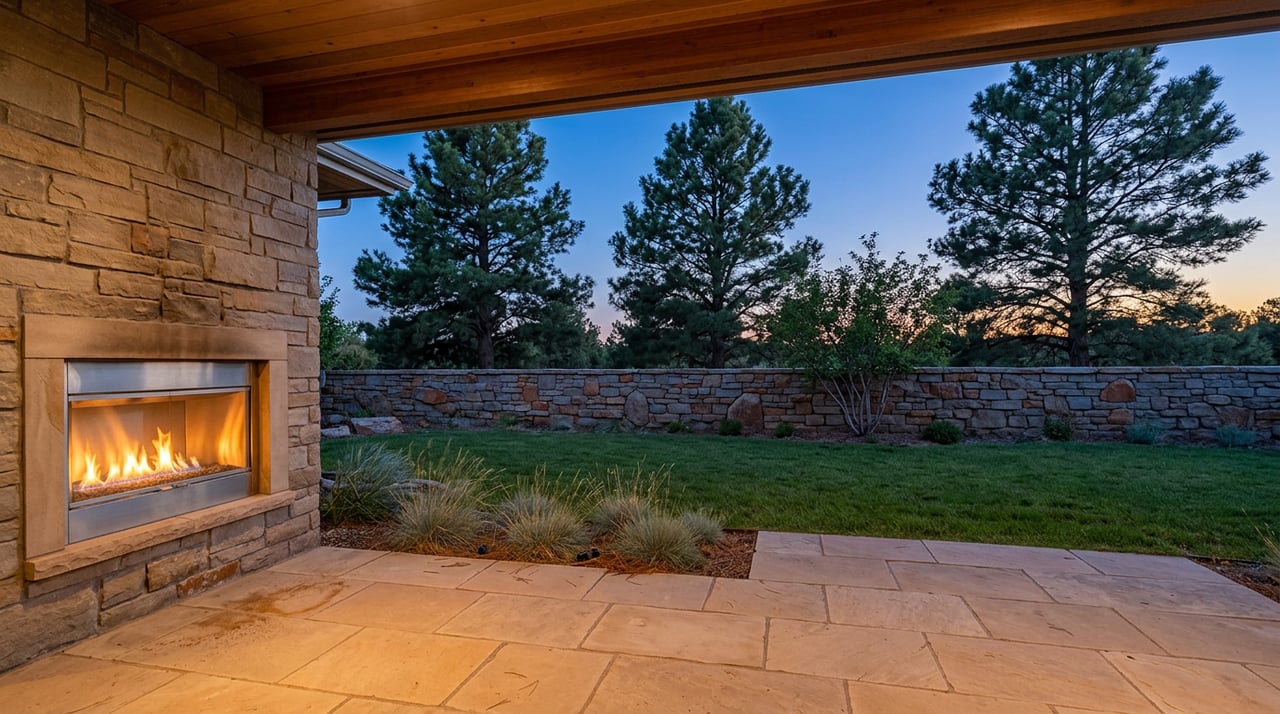
Every New Restaurant in Lone Tree's Entertainment District Used to Be Something Else
Two weeks. That's how long Jack's Modern Steakhouse had been open at 9155 Park Meadows Drive before a fire broke out inside a second-floor wall late on a January night. South Metro Fire Rescue found the fire buried deep in the framing, hidden well enough that crews had to cut into the wall to reach it. It was ruled accidental and stayed mostly contained to that one spot, but the restaurant that had just brought Australian Wagyu and dry-aged fish to the space once occupied by Mimi's Café went dark anyway, right as regulars were figuring out the menu.
If you live near the Entertainment District, you probably remember the closed sign going up almost as fast as it came down. Jack's reopened on April 28, three months after the fire, and came back with more than it left with. In May, the team opened The Blind Tiger, a speakeasy-style cocktail lounge tucked into the lower level, adding a second reason to stop in beyond the Wagyu ribeye. The restaurant still runs its wood-fired program on oak and pecan and still wet-ages its beef 60 to 90 days, but the building itself now has a basement life it didn't have in January.
Jack's fire-and-comeback story is the most dramatic thing to happen on that stretch of Park Meadows Drive this year, but it isn't the only thing worth noticing. A few blocks away on Westview Road, The Capital Grille opened this spring in a building that used to be a Red Lobster. Managed by Colorado restaurant veteran Mike Corcoran, who has spent 31 years in the business, the nearly 9,000-square-foot space now holds a temperature-controlled cellar stocked with 3,000 bottles and a menu built around steaks dry-aged 18 to 24 days in-house. Look past the marble and the wine list, though, and the building's bones are the same ones that used to hold a seafood chain's fryers.
Then there's the site at 9070 Maximus Drive, which has sat empty for more than a decade. It opened in 2001 as a Bahama Breeze Island Grill, later became a nightclub called Treo, and has been vacant since Treo closed. The city bought the blighted 3.3-acre property in November 2023 for $3.85 million specifically to force the issue, then agreed to sell it to the Texas-based Truck Yard concept for $2.2 million once the company's site plans clear city review. Truck Yard's restauranteur, Jason Boso, also built Twisted Root Burger Co. and runs Second Rodeo Brewing in the Fort Worth Stockyards, so this isn't a first-timer betting on a hard corner. It's someone who has done this kind of adaptive reuse before, choosing Lone Tree over other suburbs pitching him the same deal.
Put those three next to each other and a shape appears. None of this is new construction on raw land. Every headline opening in the district this year is a second act for a building that already failed once, whether that failure was a bankrupt seafood chain, a shuttered nightclub, or, in Jack's case, its own fire.
"Redevelopment of the City's Entertainment District is a clear priority for the City, and we are fully committed to shaping a future there that reflects the energy, values, and vision of Lone Tree, a place with something for everyone, from high-end restaurants to neighborhood gathering places."
That's Lone Tree Mayor Marissa Harmon, describing the district's direction when the city announced the Truck Yard deal. The quote reads like standard press-release language until you match it against the addresses. The city isn't building a new destination from scratch. It's placing bets on failed real estate at Yosemite Street and Park Meadows Drive and waiting for the bets to pay off one lease at a time.
Anyone who has lived in Lone Tree long enough to remember the original plans for this area knows the district has been described as a coming attraction for a long time. Back in the 1990s, the same stretch was drawn up as a major entertainment and sports hub, with concepts on the table for movie theaters, bowling, indoor recreation, and themed restaurants. Some of those ideas got built. Plenty didn't, and the district grew in pieces rather than as one coordinated plan.
The city tried to fix that gap twice. In the early 2010s, Lone Tree partnered with the Urban Land Institute to study what redevelopment could look like, with an emphasis on walkability and making the area feel like somewhere people would choose to be rather than just pass through on the way to Park Meadows mall. In 2015, the city formalized that push by creating the Lone Tree Entertainment District Business Improvement District, a funding mechanism meant to keep maintenance and infrastructure investment flowing into the area long term.
Read against that history, 2026 looks less like a lucky year for restaurant openings and more like the moment three separate threads, an arts-and-culture anchor, a decade of BID-funded upkeep, and a city willing to buy back blighted property to control who redevelops it, finally landed at the same time. The city didn't wait for a developer to solve the Treo problem on its own. It bought the land, took a loss on the resale price to get the right operator, and is counting on Truck Yard's sales tax revenue to make up the difference over time.
If you're planning a night out in the district this month, here's where things stand:
The district isn't the only thing worth tracking if you already live here. A few other dates and changes worth having on your radar:
None of this changes what the Entertainment District has always been trying to become. What's different this year is that the buildings themselves are telling the story. A steakhouse survived a fire and came back with a speakeasy. A dead seafood chain became a wine cellar with 3,000 bottles. A nightclub that sat empty for over a decade finally has a named buyer with a track record of doing exactly this kind of turnaround elsewhere. The 1990s vision for this corner of Lone Tree took three decades, two formal planning efforts, and a city willing to buy and resell land at a loss to start looking real. If you've lived here through the years when this stretch felt more like a promise than a place, this fall is the first time the buildings themselves back up what the mayor has been saying in press releases for years.
If you're watching how a neighborhood like this changes over time, whether that's redevelopment, new construction, or how a corridor's identity shifts block by block, that kind of pattern recognition is exactly what Gibbs Group brings to conversations about Douglas County real estate. Let's Connect if you'd ever like to talk through what's changing in Lone Tree or any of the communities nearby.
Experience personalized service, financial expertise, and trusted guidance for your next move. Partner with Gibbs Group for a seamless buying or selling experience built on trust, expertise, and results.