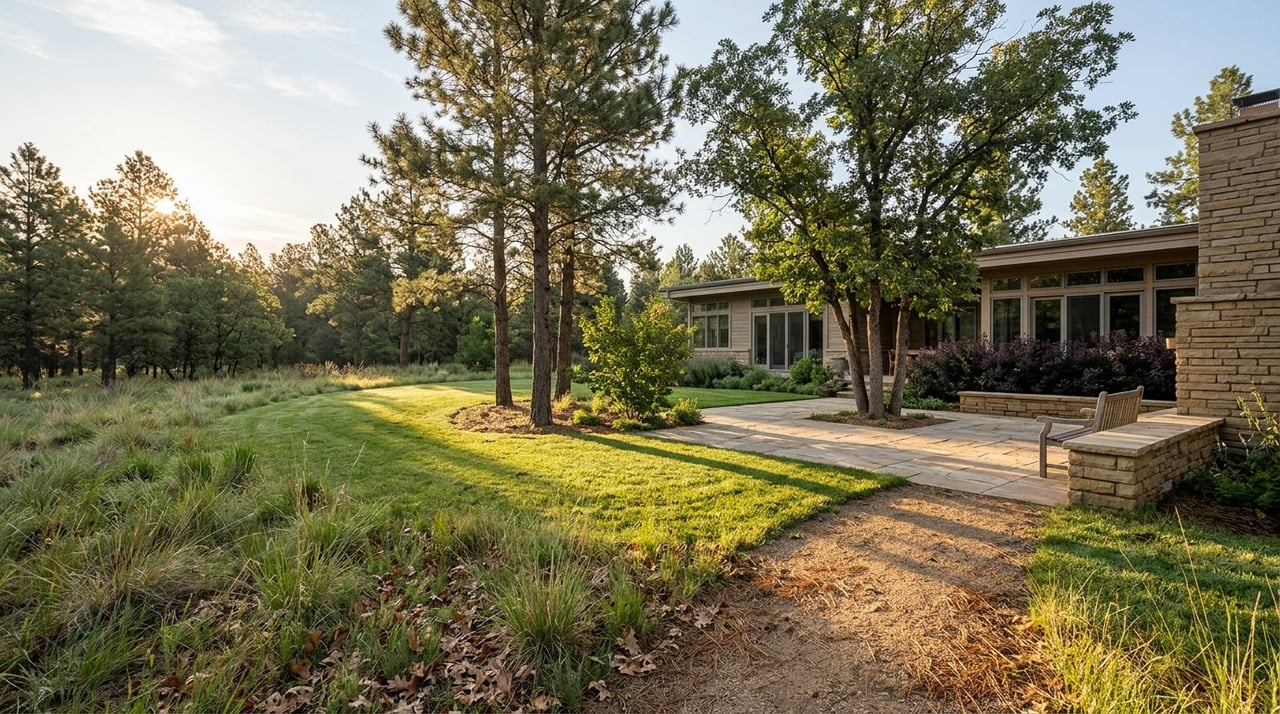
Lost Canyon Ranch Open Space: Castle Rock's Newest Trail Breaks Its Own Rulebook
The first time you drive out Lost Canyon Ranch Road, you'll pass a gate that stayed locked for the better part of two decades. If you grew up doing weekend loops at Philip S. Miller Park with a dog on a leash, you'll probably assume this new property works the same way. It doesn't, and the gap between what you expect and what's actually posted at the trailhead is the whole story of visiting Lost Canyon Ranch right now.
Castle Rock opened the 681-acre property to the public on July 13, and it immediately became the largest open space acquisition in town history at roughly $15 million. That much has been reported everywhere from Axios Douglas County to Denver7. What hasn't gotten much attention is that this particular piece of land plays by a different set of rules than every other trail system residents already know, and those rules will change your plans if you don't check them first.
Lost Canyon Ranch sits on Castle Rock's southeastern edge, pressed against Castlewood Canyon State Park, and it was one of the last large undeveloped tracts near town. Town officials have been open about the alternative: without the acquisition, this canyon and its hoodoo rock formations could have become another housing development instead of public land.
The deal came together through a partnership between the Town of Castle Rock, Douglas County, Great Outdoors Colorado, The Conservation Fund and Douglas Land Conservancy, closing in 2024 with a permanent conservation easement attached. That easement is the reason everything downstream, from the dog policy to the trail design, reads differently than what you'll find at Miller Park or along the Rock's other trail corridors.
Here's the detail that will actually change your Saturday: no dogs, anywhere on the property, and this is not a leash requirement you can work around. Horses are prohibited too. Bikes are allowed on the interior roadways but not on a single foot of hiking trail.
That's a real departure from the rest of Castle Rock's outdoor culture. Philip S. Miller Park, less than ten minutes away, welcomes leashed dogs on its eight miles of trail. So does Castlewood Canyon State Park next door. Lost Canyon Ranch is the exception, and it's an exception the master plan built in on purpose. The Town gathered public feedback through surveys and open houses specifically looking for what officials describe as low-impact, solitary recreation, and the pet ban is part of protecting habitat for the golden eagles, wild turkeys, black bears and mountain lions that use the property.
Assistant Parks Director Jeff Smullen has described the land's character in a way that captures why the rules feel different once you're actually out there. Standing on the mesa near the trailhead, with I-25 ten minutes behind you and the terrain opening into forest and canyon in every direction, he put it simply:
"Always tucked behind the neighborhood, but you'd never know it."
If you're planning a hike with your dog, that solitude comes at the cost of leaving the leash at home. Castlewood Canyon State Park, a short drive further, is still the better call for that trip.
The second detail that trips people up is parking, and it's a straightforward design quirk rather than a rule. Drive in from Lost Canyon Ranch Road and the first lot you reach is Creekside Trailhead, which holds exactly 19 vehicles plus a little overflow roadside parking where it's signed. Keep driving east up the main road and you'll reach Cattleman's Trailhead, which holds 125.
Most visitors don't know that order until they've already circled a full Creekside lot on a Saturday morning. If you're headed out on a weekend, skip the smaller lot entirely and go straight to Cattleman's. Weekday mornings are a different story: with less traffic, either trailhead works, and Creekside puts you closer to Turkey Track Loop, Gobbler's Pass, Willow Creek Path and Big Bear Hollow. Cattleman's is your access point for Pronghorn Path, the Echoes of Ancestors Trail, Lost Moccasin Trail and the upper end of Bootlegger's Loop.
Both lots have portable restrooms and no drinking water, and cell service is limited across the property, so plan your route before you lose signal rather than after.
Ten miles of trail are hikeable today, out of a planned 15-mile network. The names on the map tell you almost as much as the trail descriptions. Bootlegger's Loop nods to local lore about Prohibition-era alcohol production in the canyon. Echoes of Ancestors Trail runs near Franktown Cave, an archaeological site with evidence of human use going back roughly 8,000 years, and connects directly into Castlewood Canyon State Park for hikers who want to string the two properties together into a longer day.
For an easier outing, Willow Creek Path is a flat, ADA-accessible route along the riparian corridor that ends at a dam with wide views into the canyon. Pronghorn Path off Cattleman's Trailhead is similarly flat and open, though it offers almost no shade, so it's better suited to a morning or evening visit than the middle of an August afternoon. Most of the rest of the system, including Big Bear Hollow's overlook and the climb up to Turkey Track Loop, is rated moderate to difficult, with rock steps, narrow passages and some cliff exposure.
The Town is also candid that this is still an active construction zone. Five more miles, including the Golden Eagle Loop and Rustler's Ridge Loop, remain closed while crews finish the work, with an opening expected later this year. Visitors are asked to yield to construction traffic and equipment in the meantime.
One more practical wrinkle worth building into your calendar: summer hours run 5:30 a.m. to 9 p.m. only through August 31. Starting September 1, the property switches to its spring and fall schedule of 6:30 a.m. to 8 p.m., which trims an hour off both ends of the day. If you've gotten used to a sunset lap after work this summer, that window is about to close earlier than you're used to.
The Town also flags rattlesnakes and black bears as active on the property, which is worth taking seriously rather than as boilerplate, given how much of the terrain is exposed rock and dense scrub.
Lost Canyon Ranch isn't just sitting there waiting to be discovered. The Castle Rock Parks and Trails Foundation has started using the site directly for community programming, including a Twilight on the Trails evening set for Saturday, September 12, held on the property itself. It's a small but telling sign of how quickly the town is folding this land into its regular civic calendar rather than treating it as a static preserve.
That fits the way Mayor Jason Gray framed the opening back in July: open space, he said, is one of the defining features of Castle Rock's quality of life. Combined with the neighboring state park and other protected parcels, Lost Canyon Ranch helps hold together more than 4,000 contiguous acres on the town's southeastern edge, which is a meaningfully different scale than the pocket parks and trail segments most residents are used to navigating.
None of this means Lost Canyon Ranch is complicated to visit. It means the visit looks different from a Philip S. Miller Park trip, and knowing that before you load the car saves you a wasted drive. Leave the dog at home, aim for Cattleman's Trailhead on weekends, bring your own water, and check the calendar before September 1 if you're counting on late evening light.
Understanding a town's evolving green space is part of understanding daily life here, whether you've lived in Castle Rock for twenty years or two. It's also the kind of detail Gibbs Group pays attention to as part of knowing this community from the ground up. If you're curious about how Castle Rock's newest open space fits into the bigger picture of life in Douglas County, or you just want to talk through what's changing in the neighborhoods nearby, Let's Connect.
Experience personalized service, financial expertise, and trusted guidance for your next move. Partner with Gibbs Group for a seamless buying or selling experience built on trust, expertise, and results.