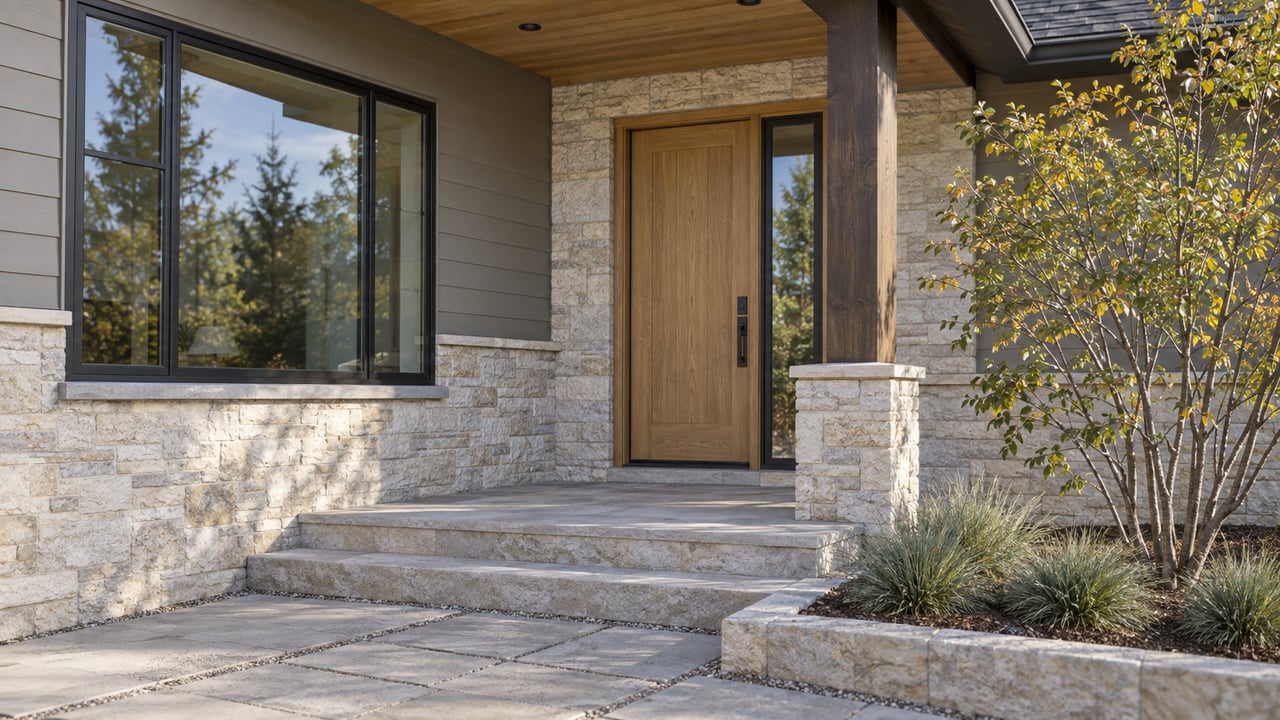
Centennial's Property Tax Rate Hasn't Moved Since 2001. Your Bill Still Will.
In December 2023, Centennial's finance director stood before city council with two property tax statements in hand. Both belonged to houses in Centennial. Both carried similar actual and assessed values, the kind of pair a buyer might cross-compare on a Sunday afternoon of open houses. One sat on the west side of the city, the other on the east. When Jeff Cadiz laid the numbers side by side, the total tax owed differed by about $1,000.
Nothing the city itself did caused that gap. Centennial's own municipal mill levy applied equally to both properties. The difference came from somewhere else entirely, and understanding where is the difference between reading a tax bill and being surprised by one.
Centennial's mill levy has stayed close to flat since the city incorporated in 2001. According to reporting from the Centennial Citizen, the rate has held near 4.982 mills for most of that period, dipping to 4.906 mills in 2008 when a spike in home values prompted temporary relief, and landing at 5.010 mills for 2023 once a small abatement adjustment was added. Cadiz told council that Centennial's own rate typically represents between 4 and 6 percent of a property owner's total tax bill.
That is a narrow slice. It means the line item that says "City of Centennial" on your statement is close to a rounding error next to everything stacked around it. A city that wanted to compete on property tax could not move the needle much even if it tried, because the city's piece was never the biggest piece to begin with.
Colorado's property tax system layers multiple independent authorities onto every parcel. Each one sets its own rate, expressed in mills, and each rate gets added to the others to produce the total a homeowner pays. The state's own explainer on the mechanics, published by the Division of Property Taxation, describes it plainly: county government, school districts, municipalities, and special districts all calculate the revenue they need and divide it by the assessed value inside their boundaries to land on a mill levy.
In Centennial, that stack typically includes Arapahoe County, the Cherry Creek School District in most of the city, and whatever water, sanitation, fire protection, or metro district happens to cover a given address. Metro districts in particular tend to show up in newer subdivisions, where developers use them to finance the roads, sewers, and parks that come with a new build. An older block and a newly built block half a mile apart can carry very different totals even though the city's own rate never changes.
The assessed value underneath all of this moves on its own schedule too. Colorado reassesses real property in odd-numbered years, so the values behind a 2026 bill were set during the 2025 cycle and will not shift again until 2027. A home's market price can climb between now and then without its assessed value catching up until the next reassessment lands.
Centennial did not grow from a single town center outward. It incorporated in 2001 by drawing a municipal boundary around neighborhoods that had already been developed, many of them served for years by special districts that existed before the city did. Those districts kept operating after incorporation. The city sits on top of that older infrastructure rather than replacing it.
That history is why a west-side house and an east-side house inside the same city limits can land on different sides of a $1,000 gap. It is not that one part of Centennial is taxed more heavily than another by design. It is that each parcel inherited its own combination of pre-existing districts, and the city's uniform 5-mill layer gets added onto whatever was already there.
Cadiz made the same point to council when he shared the two statements: the properties were comparable on paper, and the gap still showed up because "different taxing authorities" apply to different parts of the city. A buyer comparing two Centennial listings by asking only "what does Centennial charge" is comparing the smallest number on the page and treating it as the whole answer.
The fix is straightforward once you know to look for it. Every parcel in Colorado sits inside a specific tax area, and that tax area determines which authorities apply and at what combined rate. The Division of Local Affairs maintains a public property tax map that lets you search an address and see the taxing districts attached to it. The Arapahoe County Assessor's Office can confirm the same information directly from the parcel record, and a title company will have the certified mill levy for a specific address well before closing.
For a buyer weighing two Centennial homes at similar prices, the useful question is not "how much does the city charge" but "what tax area is this parcel in, and what's the combined levy." That single check can explain a few hundred dollars of annual difference that a listing sheet will never mention and a median-price chart cannot show.
For a seller, the same logic works in reverse. If a buyer's lender or agent pulls a comparable's tax bill that looks lower, the gap is worth explaining before it becomes a sticking point. It is rarely a mystery once someone checks which district lines the two parcels actually fall inside.
The house on the west side and the house on the east side that Cadiz described to council were never mysteries either. They were two ordinary Centennial homes that happened to sit on opposite sides of lines drawn long before the city existed, still doing the quiet work of setting what each owner pays.
If you are comparing homes in Centennial and want the actual tax picture behind the listing price, not just the city's headline rate, Gibbs Group can help you pull the specific numbers before you write an offer. Let's Connect.


Experience personalized service, financial expertise, and trusted guidance for your next move. Partner with Gibbs Group for a seamless buying or selling experience built on trust, expertise, and results.