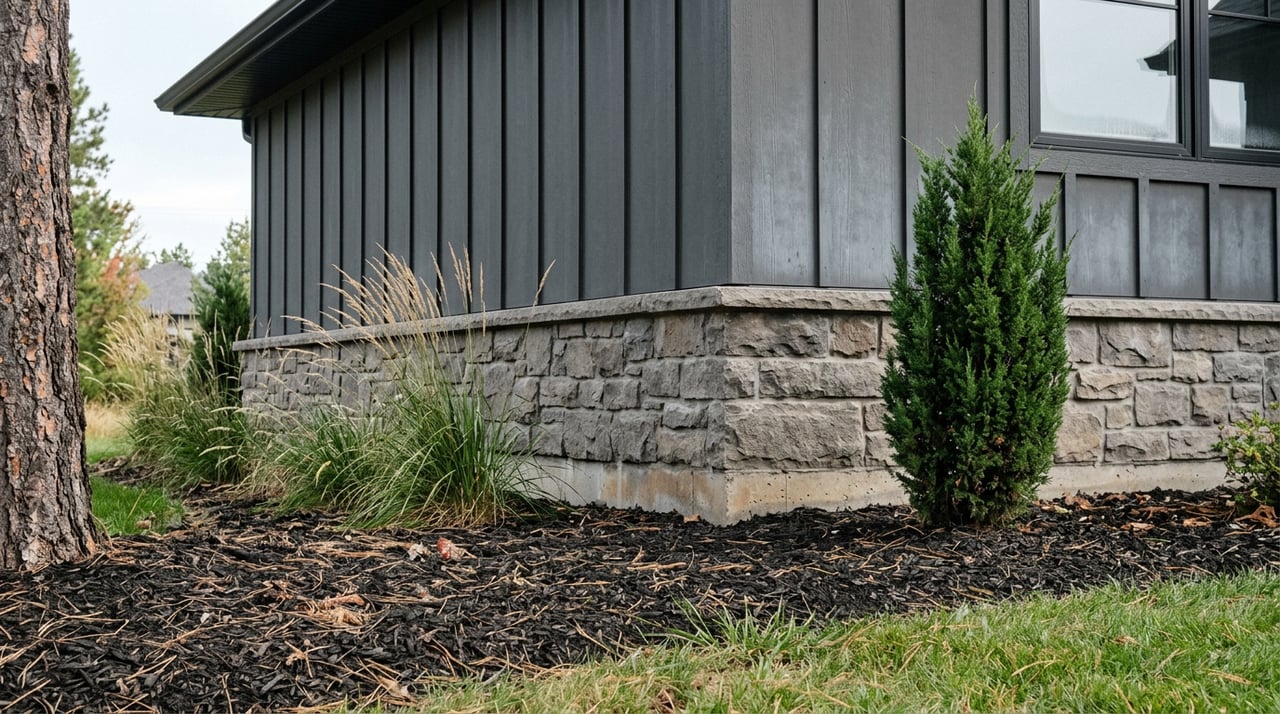
Castle Rock Expansive Soil Inspections: Why Month 11 Matters
Ask a buyer under contract on a five-year-old home in Castle Rock when their foundation is most at risk, and most will point to the day they waived their inspection contingency or the day they didn't. Almost none of them will say month eleven of ownership, the week before their builder's warranty runs out. That's the gap this post is built to close.
Castle Rock has more recently built housing than almost anywhere else in the Denver metro, with most of its inventory dating to 1990 or later and concentrated in subdivisions like Founders Village, The Meadows, Castle Pines, and Castle Rock proper. New construction has kept arriving across these areas through 2026. The assumption that follows naturally, especially among buyers comparing a 1998 ranch in Denver to a 2019 build in Castle Rock, is that newer means safer. The soil underneath doesn't know or care how old the framing is.
Castle Rock sits on expansive clay, the kind derived from bentonite and montmorillonite deposits that the Colorado Geological Survey calls the state's most significant geologic hazard. These clays can expand up to 20 percent by volume when wet and exert as much as 30,000 pounds per square foot against a foundation. Wet spring snowmelt swells the ground. Dry summer heat shrinks it back. That cycle repeats every year, on every lot, whether the slab was poured in 1995 or last October.
Subdivisions built across Douglas County in the 1990s and 2000s show the full range of outcomes from that cycle, from cosmetic drywall cracking to slab heave severe enough to trigger class-action litigation against some builders. Those homes weren't poorly designed by accident. They were built before some of the engineering practices used today, and the clay still won. A newer build simply hasn't run the clock on enough wet-dry cycles yet to reveal how it will hold up. The risk isn't gone. It's deferred.
That deferral is why the highest-value inspection for a Castle Rock home built in the past decade often isn't the one at closing. It's the 11-month builder warranty inspection, timed just before the standard one-year warranty expires. By month eleven, the home has usually been through at least one full moisture cycle. Cracks, sticking doors, or early slab movement that a five-day pre-closing inspection couldn't have caught yet have had time to show up while the builder is still contractually on the hook to address them.
| Inspection Moment | What It Actually Catches | Typical Cost |
|---|---|---|
| Days 5 to 10 after contract (standard inspection) | Visible defects and a baseline condition, not future movement | $450 to $700, more with radon or sewer scope add-ons |
| Month 11 (builder warranty inspection) | Settlement that surfaces after a full wet-dry cycle, while the builder is still liable | Often within standard inspection pricing |
| Year 3 to 7 (typical onset for homes without engineered fill) | Differential movement serious enough to warrant a structural opinion | $400 to $700 for an engineer's evaluation, $8,000 to $35,000 or more for repair |
Look at that table sideways and the pattern is clear. The transaction moment everyone treats as the safety checkpoint, the standard pre-closing inspection, is the one least equipped to catch the problem this town is actually prone to. It's a snapshot of a house that hasn't been tested by a season yet.
Castle Rock sits in a transition zone between the plains to the east and foothill geology to the west. That in-between position means soil composition changes meaningfully across the town, sometimes from one street to the next. Some lots rest on dense native clay. Others sit on engineered fill placed during development. Those two conditions behave differently under the same house, which means the subdivision name on a listing sheet tells you when the ground was graded, not how stable it is underneath your specific slab.
The subdivision name on the plat tells you when the ground was disturbed. It does not tell you how it was disturbed, or what sits under your particular lot.
This matters because the instinct to treat neighborhood reputation as a proxy for soil risk doesn't hold up here. A home in Castle Pines and a home two miles away in The Meadows could be resting on entirely different subgrade conditions. The only way to know what's under a specific property is to test that property, not to trust the reputation of the plat it sits on.
Colorado's standard purchase contract gives buyers an inspection period, typically five to fourteen days in Douglas County, with seven to ten days common for a standard single-family home and shorter windows of three to five days showing up in competitive offers. Inside that window sits a linked objection deadline and a resolution or termination deadline. Miss either one without a written extension and the right to negotiate or walk away can disappear along with the earnest money.
If a general inspector flags stair-step cracking, a sticking door, or a sloped floor during that window, there usually isn't time to wait for a full seasonal cycle before deciding how to respond. This is where a structural engineer's evaluation earns its place. At $400 to $700, it costs less than most buyers spend on the appliance package they're negotiating for, and it gives a licensed opinion on whether movement is cosmetic, historical, or active before the objection deadline arrives. That opinion becomes the basis for a repair request, a credit, or a price adjustment grounded in evidence rather than guesswork.
Buyers stacking services often add a sewer scope and radon test alongside the general inspection. Standalone, those typically run around $250 and $199. Bundled with the main inspection, each commonly drops closer to $175. Given that Douglas County sits in a high-radon area and that soil movement can shift underground sewer lines even in newer construction, both are worth factoring into the total due diligence budget rather than treating them as optional extras.
Sellers face the mirror image of this problem. If a home has known settlement history, particularly one built during the 1990s or 2000s window with documented patterns in the area, a pre-listing inspection lets a seller understand and disclose the condition on their own terms rather than reacting to a buyer's objection under deadline pressure. That's a smaller, calmer version of the same due diligence buyers are doing, just earlier in the timeline.
None of this requires a geology degree to start noticing. The early indicators show up in ordinary daily friction around the house:
Spotting one of these doesn't mean a home has a serious problem. It means the conversation shifts from "is this fine" to "let's get a professional opinion before the objection deadline," which is a much stronger position to negotiate from than guessing.
Does a home built in the last two years still need a structural evaluation? Often, yes. A home that hasn't been through at least one full wet-dry cycle hasn't been tested yet. The 11-month warranty inspection exists specifically to catch what a closing-week walkthrough can't.
Isn't the builder's own soils report enough? A builder's soils report speaks to the design phase, confirming the foundation was engineered for the conditions found at the time of construction. It doesn't tell you how that specific lot has actually performed since, which is what an independent evaluation is for.
What if I'm selling in one of the subdivisions with known settlement history from the 1990s or 2000s? Disclosure obligations depend on what you actually know about your property's history. A pre-listing inspection lets you understand your home's current condition on your own timeline, rather than finding out for the first time when a buyer's objection lands.
Castle Rock's clay isn't going anywhere, and neither is the mismatch between when most buyers think risk is highest and when it actually shows up. Knowing the difference is what turns a standard transaction into an informed one.
If you're weighing a purchase, a sale, or a warranty deadline that's creeping up faster than you expected, Kelly Gibbs and the Gibbs Group can help you build a due diligence plan suited to your specific property, not just your neighborhood's reputation. Let's Connect.



Experience personalized service, financial expertise, and trusted guidance for your next move. Partner with Gibbs Group for a seamless buying or selling experience built on trust, expertise, and results.